As organizations scale their database operations, the need for proper governance becomes critical. Database governance tools help teams manage database changes safely, enforce access control policies, track schema migrations, and maintain compliance.
This article examines the leading open-source database governance solutions to help you select the right tool for your requirements.
OpenMetadata
OpenMetadata is an open-source platform for data discovery, observability, and governance built around a central metadata repository.
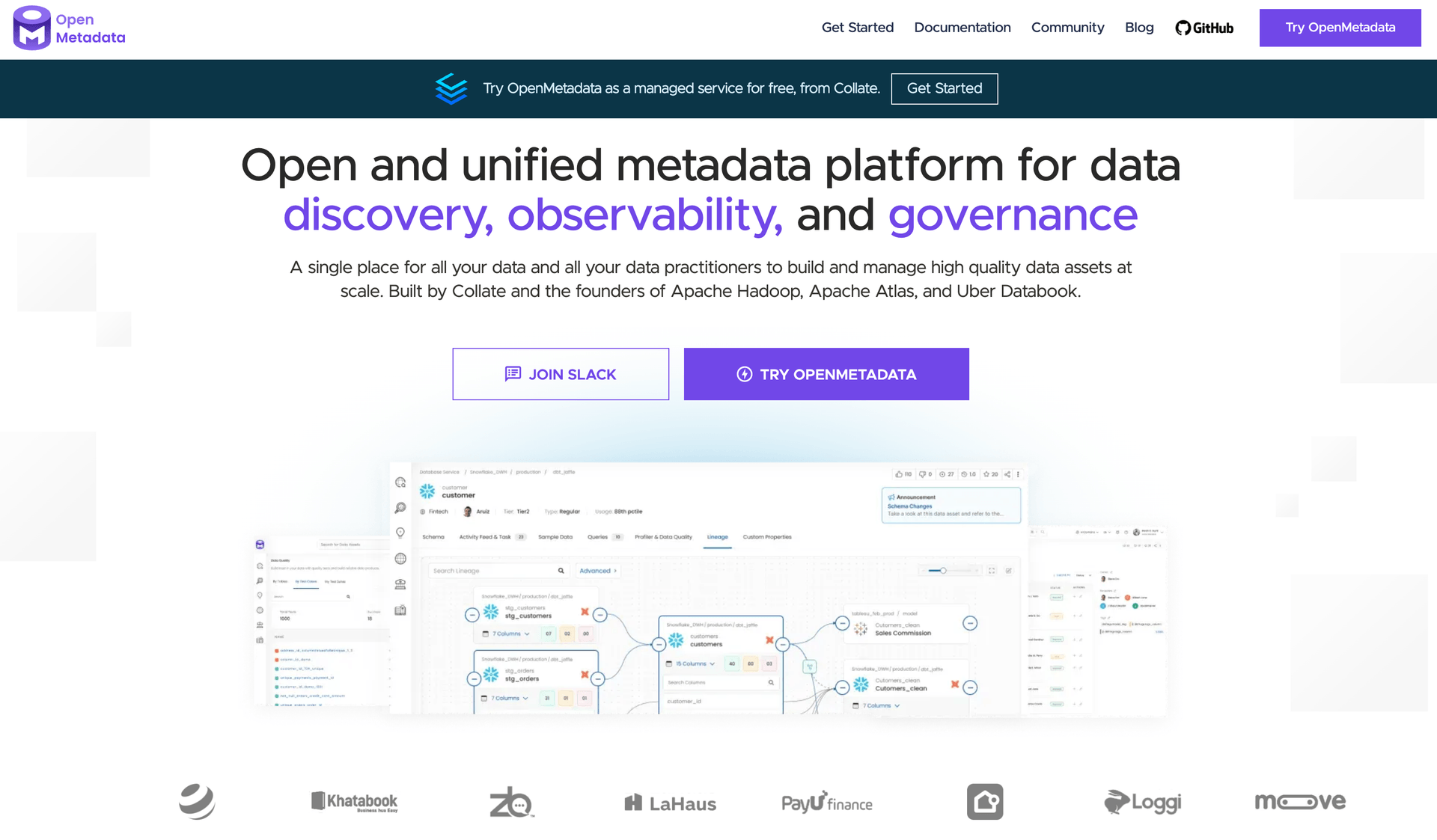
OpenMetadata offers comprehensive metadata management with powerful search capabilities and rich data context. Its standout features include column-level lineage tracking, automated data quality monitoring, and a no-code profiling system that builds trust in organizational data assets.
The platform provides collaborative workflows for metadata enrichment, detailed data insights, and sophisticated classification for governance requirements. Through its extensible connector framework, OpenMetadata integrates with over 80 data sources across databases, dashboards, messaging, and pipelines. It has become a leading solution for organizations seeking modern, API-first metadata management.
DataHub
DataHub is an open-source metadata platform for the modern data stack, enabling data discovery, observability, and governance.
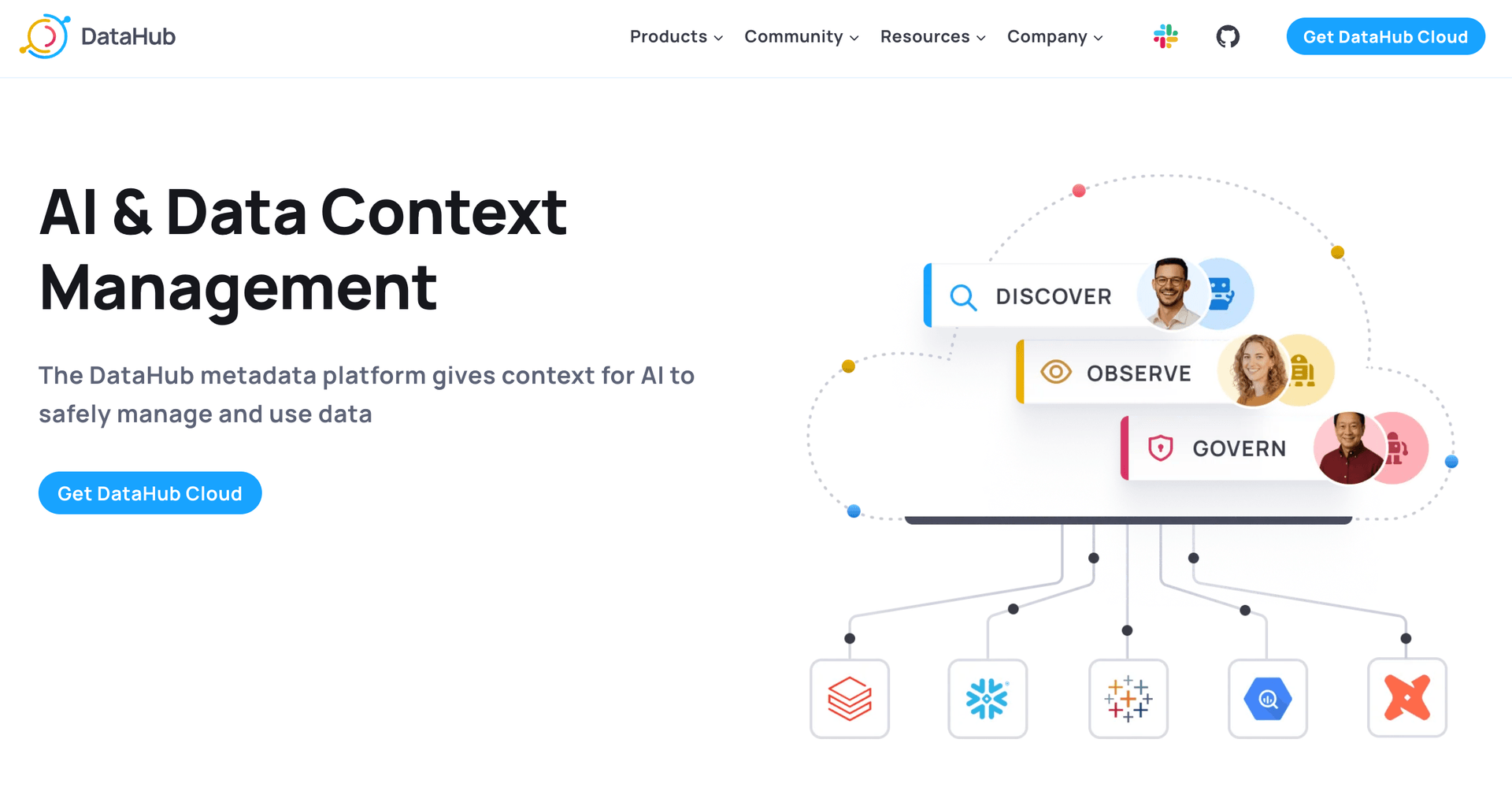
DataHub employs a centralized metadata model to create consistent context across diverse data ecosystems. The platform features powerful search, end-to-end lineage tracking, and a comprehensive set of integrations spanning databases, BI tools, and data processing frameworks.
Its strengths include a robust GraphQL API, fine-grained access controls, automated metadata ingestion, and customizable metadata models. DataHub's microservices architecture supports scalable deployment options from single-docker to Kubernetes. With an active LFAI foundation project status, DataHub suits organizations requiring flexible, enterprise-grade metadata management well.
Apache Atlas
Apache Atlas is a scalable governance and metadata framework for enterprise data assets that provides open metadata management and governance capabilities.
Apache Atlas provides a strong foundation for data governance with its extensible type system designed to model business metadata. It excels in highly regulated environments where detailed data lineage and classification are critical. The platform offers comprehensive services for data discovery, classification, and auditing with a focus on Hadoop ecosystem compatibility.
Key strengths include its robust security integration with Apache Ranger, flexible metadata classification system, and comprehensive audit capabilities for compliance reporting. Atlas provides APIs and hooks for integration with various data sources and destinations. Atlas remains a solid choice for organizations with complex governance requirements, particularly those with significant investments in the Hadoop ecosystem.
Amundsen
Amundsen is an open-source data discovery and metadata platform that improves data accessibility within organizations.
Amundsen employs a PageRank-inspired algorithm to surface relevant data assets based on usage patterns. The platform offers an intuitive search interface and rich metadata presentation, making data discovery straightforward even in complex environments.
Amundsen features native integrations with popular data sources, quality monitoring tools, and documentation systems like Confluence. Its microservice architecture (with frontend, metadata, and search services) ensures scalability and flexibility. While more focused on discovery than comprehensive governance, Amundsen provides an accessible entry point for organizations beginning their metadata management journey.
Bytebase
Bytebase is an open-source database DevSecOps platform that focuses on operational governance — controlling how database changes are made, who can make them, and maintaining a full audit trail.
While the tools above focus on metadata discovery and cataloging, Bytebase governs the operational side: change review, deployment approval, access control, and compliance auditing. It supports 23+ databases including PostgreSQL, MySQL, SQL Server, Oracle, and MongoDB.
Key governance capabilities:
- Change review and approval — every DDL/DML change goes through a structured workflow with 200+ SQL review rules enforced before execution. Enterprise tier adds custom multi-tier approval workflows.
- Role-based access control — workspace and project-level roles control who can view, query, or modify each database. Pro tier adds SSO integration.
- Audit logging — every query, schema change, login, and permission change is logged with the real user's identity, timestamp, and full SQL text. Available on Pro and Enterprise.
- Dynamic data masking — mask sensitive columns in query results based on user roles and semantic types, without changing the underlying data. Enterprise tier.
- Just-in-time data access — grant temporary, time-limited access to sensitive databases for emergency debugging, with automatic expiration.
- Multi-environment deployment — enforce dev → staging → production pipelines so changes are tested before reaching production.
Bytebase is MIT-licensed with commercial features (Enterprise) for advanced governance needs. It complements metadata platforms like OpenMetadata or DataHub — they catalog what data exists; Bytebase governs how it's changed and accessed.
Conclusion
- OpenMetadata excels with its modern architecture and comprehensive connector ecosystem, ideal for organizations seeking an API-first approach with rich collaboration features;
- DataHub provides enterprise-grade scalability with strong lineage capabilities, making it suitable for complex data environments requiring detailed context;
- Apache Atlas remains the go-to solution for Hadoop-centric organizations and highly regulated industries needing robust classification and security integration;
- Amundsen offers the most accessible entry point for teams prioritizing data discovery and user adoption over comprehensive governance;
- Bytebase covers the operational governance side — change review, approval workflows, access control, audit logging, and data masking — complementing the metadata-focused tools above.
As database estates grow increasingly complex, these open-source tools continue to evolve to meet emerging challenges. Many organizations start with targeted implementations addressing specific pain points before expanding to full governance frameworks.
The future of database governance lies in automation, AI-assisted metadata management, and seamless integration across the entire data lifecycle. Whichever tool you choose, establishing strong governance practices early will pay dividends as your data ecosystem grows.
FAQ
What is database governance?
Database governance is the set of policies, processes, and tools that control how databases are managed across an organization. It covers two areas: metadata governance (cataloging what data exists, who owns it, and how it flows) and operational governance (controlling who can change or access the data, enforcing review before deployment, and maintaining audit trails).
What is the difference between metadata governance and operational governance?
Metadata governance tools (OpenMetadata, DataHub, Apache Atlas) focus on data discovery, cataloging, lineage tracking, and classification. Operational governance tools (Bytebase) focus on change management, access control, deployment approval, and audit logging. Most organizations need both — one to understand their data, the other to control changes to it.
Which database governance tool should I choose?
It depends on your primary challenge. If you need data discovery, lineage tracking, and metadata cataloging, start with OpenMetadata or DataHub. If you need to control database changes, enforce SQL review, manage access permissions, and maintain an audit trail for compliance, start with Bytebase. For comprehensive governance, combine a metadata platform with an operational governance tool.